Profiles
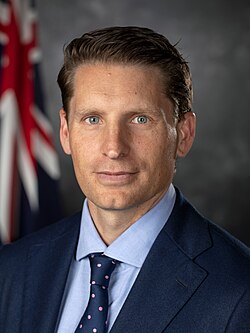
Andrew Hastie
Organisation: Liberal Party, Australia
Bio: Andrew Hastie (born 1982) is an Australian politician and former army officer who has been the Liberal Party Member of Parliament for the Western Australian seat of Division of Canning since 2015.
Before entering politics, Hastie served in the Australian Army, including deployment with the Special Air Service Regiment in Afghanistan. His military service and security background have strongly shaped his political focus on defence and national security.
Within the Liberal Party of Australia, Hastie is regarded as part of the party’s conservative wing and has been an outspoken advocate for stronger defence policy and a more sceptical approach to the strategic ambitions of the Chinese Communist Party. He chaired the Parliamentary Joint Committee on Intelligence and Security from 2017 to 2022, overseeing national security legislation and intelligence oversight. In opposition he has also served as Shadow Minister for Defence.
Hastie has a long history of anti-China rhetoric bordering on Sinophobia. He triggered a strong reaction from Beijing with a comparison with Europe before World War II:
“Like the French, Australia has failed to see how mobile our authoritarian neighbour has become” implying an historical parallel between Nazi Germany and China, reinforced by this statement:
“The West once believed that economic liberalisation would naturally lead to democratisation in China. This was our Maginot Line.”
His rhetoric on China is hawkish.
“The United States and China are in a contest for primacy in the Indo-Pacific… Australia must prepare for the possibility of conflict.”
“The Chinese Communist Party is not our friend.”
“The CCP is exporting a model of authoritarian governance that is fundamentally at odds with Australia’s democratic values.”
“We must be clear-eyed about the strategic intentions of the Chinese Communist Party and the threat it poses to the free world.”
“Australia must reduce its economic dependence on China so that we can make sovereign decisions without fear of coercion.”
“The Chinese Communist Party is attempting to reshape the international system in ways that suit its authoritarian interests.”
Social Media: Link
Featured In
| Article | Mentions |
|---|---|
| An unsurprising reporting fail | 2 |

Andrew John Westerman
Organisation: No organisation
Bio: My journey from a deeply ingrained anti-China perspective, shaped by Cold War era narratives and conservative media, to a more nuanced understanding of the country is the driving force behind this website.
Early in life, I was exposed to a steady stream of anti-communist propaganda, portraying China as a threat to the Western world. This narrative was reinforced by media coverage of events like the Tiananmen Square protests and the Hong Kong protests, often presented with a strong anti-China bias. However, his perspective began to shift through a combination of personal experiences, critical thinking, and exposure to alternative sources of information.
My engagement with YouTubers like Daniel Dumbrill and Carl Zha provided valuable insights into Chinese society and challenged the dominant Western narratives. Exploring Chinese history through sources like the documentary series "From Yao to Mao" deepened the author's understanding of China's past and present. Observing the biased and often sensationalized coverage of events like the Hong Kong protests led me to question the credibility of mainstream media narratives.
This journey highlights the importance of critical thinking, seeking diverse perspectives, and engaging with information from multiple sources to develop a nuanced understanding of complex issues. It also underscores the influence of media narratives and the potential for these narratives to shape public perception and influence political discourse.
Social Media: Link
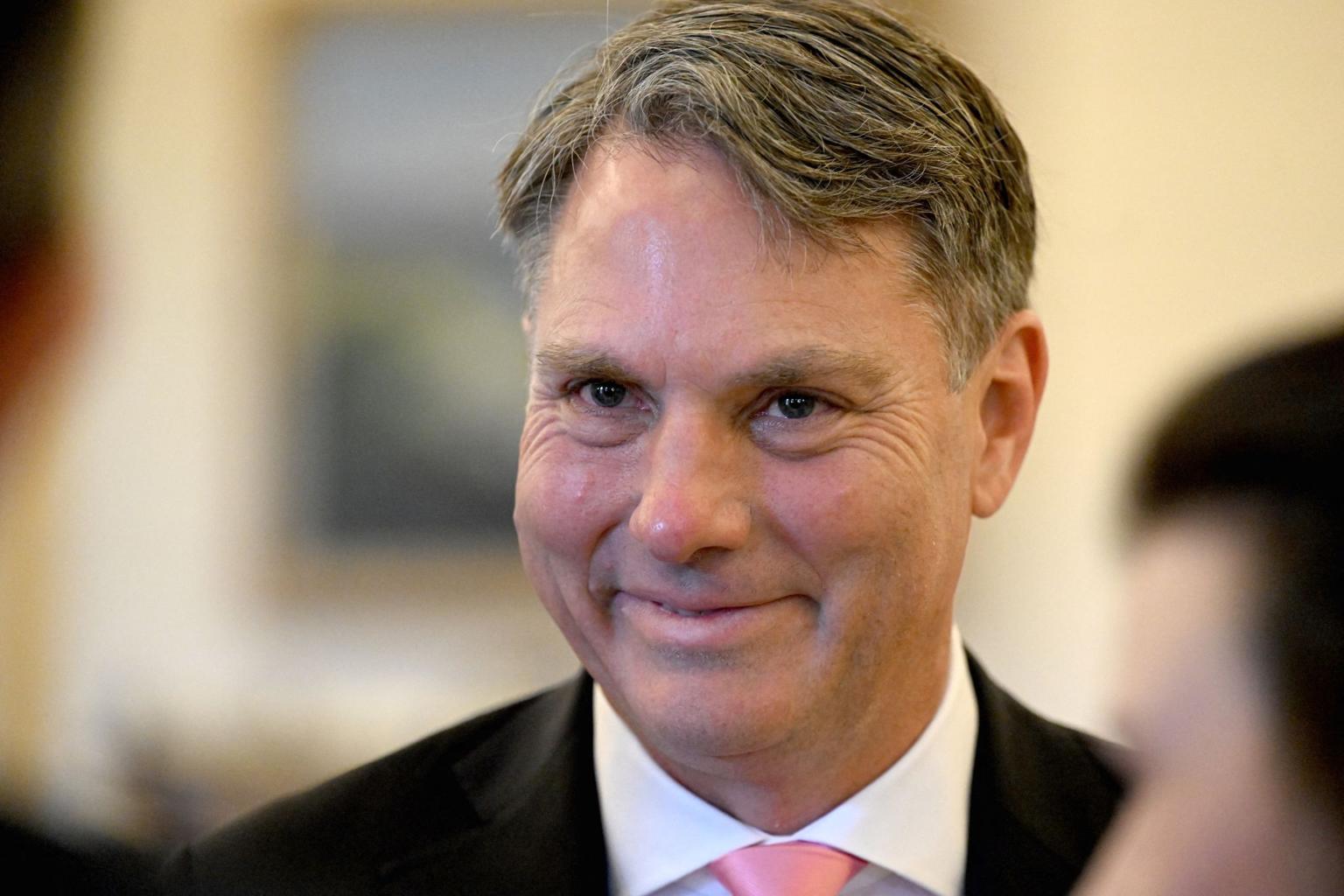
Richard Marles
Organisation: Australian Labor Party
Bio: Richard Marles (born 1967) is an Australian Labor politician who has served as Deputy Prime Minister of Australia and Minister for Defence since 2022 in the government of Anthony Albanese. He has been the federal Member of Parliament for Division of Corio (based around Geelong, Victoria) since 2007. Before entering parliament, Marles worked as a lawyer and as an official with the Australian Council of Trade Unions. Within the Australian Labor Party, he became known for his focus on defence policy and the US alliance.
As Defence Minister he has been central to Australia’s deepening military cooperation with the United States and the United Kingdom through the AUKUS, including plans for Australia to acquire nuclear-powered submarines.
Marles generally adopts a more diplomatic tone than figures like Andrew Hastie, but he consistently frames China as Australia’s primary strategic challenge while insisting Australia does not seek confrontation.
Marles uses war-mongering rhetoric to frame China.
“China has undertaken the largest conventional military build-up since the end of the Second World War.”
Military build-ups can be measured by total spending increase, absolute spending, share of GDP, number of platforms (ships, aircraft, missiles), technological capability and regional force balance.
Different metrics produce very different conclusions, but the accepted metric is share of GDP. In this he fails to state that the US spends 3.5%, Australia 2.1% and China 1.7%. The associations with WW2 and largest conventional military build-up (using absolute metric) are designed to invoke fear. In fact, in absolute terms, US defence spend is three times China.
Social Media: Link
Featured In
| Article | Mentions |
|---|---|
| An unsurprising reporting fail | 2 |